



Sen. Ben Ray Luján, a Democrat from New Mexico, and Sen. Jeff Merkley, a Democrat from Oregon, launched laws Thursday that may ban so-called surveillance and surge pricing in grocery shops. Formally referred to as the Cease Worth Gouging in Grocery Shops Act of 2026, the Senate laws is modeled on a 2025 invoice within the Home.
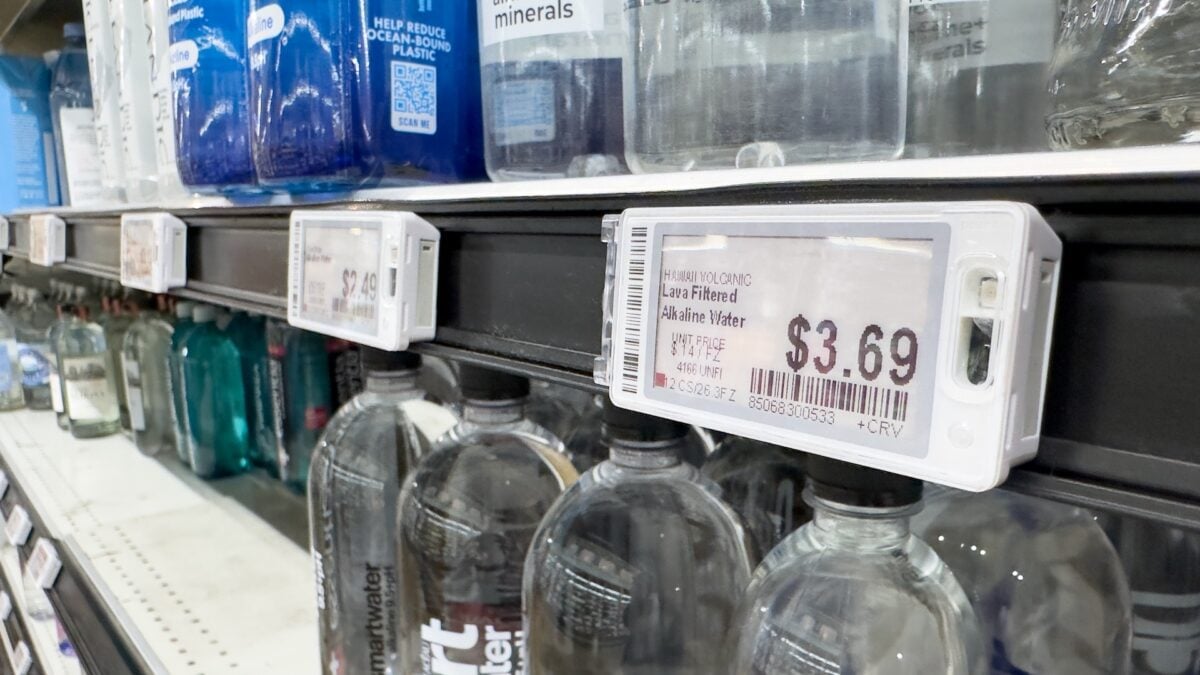
The brand new invoice would require shops to reveal their use of facial recognition expertise and would ban digital shelf labels (ESL) in massive grocery shops. ESLs are controversial as a result of they permit retailers to alter the value of a given merchandise remotely, opening up the chance that they might be tied to algorithms which elevate and decrease costs based mostly on circumstances within the retailer or who’s making an attempt to purchase one thing.
Hypothetically, shops can cost completely different costs at completely different occasions of day or depend on completely different inputs, proper all the way down to personalizing the value based mostly on a person who was taking a look at a given merchandise, noticed with facial recognition tech. The priority is that elements like race, gender, and revenue stage might be used to find out how a lot persons are charged. A 2025 research discovered that Instacart was charging prospects completely different costs for a similar merchandise, typically as a lot as 23% extra. A couple of weeks after the research obtained damaging press protection, Instacart introduced it was pulling the plug on its AI-powered pricing.
“In New Mexico and throughout the nation, Individuals are struggling to place meals on the desk,” Sen. Luján stated in an announcement posted online. “With rising prices pushed by President Trump’s commerce struggle and Republican cuts to SNAP, Congress should act to make sure that applied sciences are getting used to enhance the lives of Individuals, not enhance their grocery payments. Our buddies, household, and neighbors ought to be capable of store at their native grocery retailer with out worrying about predatory pricing.”
At the very least six states have seen laws launched to cease surge and surveillance pricing, in keeping with the United Meals and Industrial Staff Worldwide Union (UFCW), which has additionally developed a 30-second ad to unfold the phrase on the risk.
It’s not clear what number of grocery shops are literally using in-store surveillance pricing, however a part of the rationale legislators really feel like new legal guidelines are wanted is that they need to get forward of issues earlier than the apply turns into commonplace.
“This laws is definitely fairly easy: If two persons are in the identical retailer shopping for the identical merchandise, they need to pay the identical value,” Washington State Consultant Mary Fosse stated in an emailed assertion.
“Giant retailers are investing in AI, algorithms, and information programs that may change costs immediately, individually, and secretly,” Fosse continued. “We have to cease the rip-off on the register earlier than these practices grow to be the norm. Know-how ought to serve employees and customers, not exploit them.”
The Biden administration launched an investigation into surveillance pricing in 2024 with FTC chair Lina Khan initiating a research on the methods it could hurt U.S. customers. However after President Donald Trump took energy in 2025, his administration killed the research.
Surge pricing for meals is extraordinarily unpopular, with some of the well-known circumstances taking place in 2024 when Wendy’s merely mentioned the potential for introducing it in 2025. Inside simply a few days the backlash had gotten so dangerous the corporate denied even considering the thought, regardless of fairly clear proof it was engaged on surge pricing. The restaurant chain’s CEO had even stated it could “start testing extra enhanced options like dynamic pricing” in an earnings name.
Customers are extraordinarily value delicate in the case of meals nowadays, and it’s no surprise, as folks battle to get by in an economic system that prioritizes inventory costs and Wall Avenue.
“Individuals are hurting underneath the affordability disaster, and UFCW members see the ache of their faces each time they enter the grocery retailer,” UFCW Worldwide President Milton Jones stated in an announcement to Gizmodo. “Our members additionally really feel it themselves after they store for his or her households.”
“We’re beginning this nationwide marketing campaign to cease firms from having the ability to change costs in entrance of their eyes simply because they reside within the incorrect zipcode or are a brand new father or mother. We’re proud to work with elected officers in each a part of the nation to steer the combat for reasonably priced groceries and good jobs as a result of that’s what our members need.”


